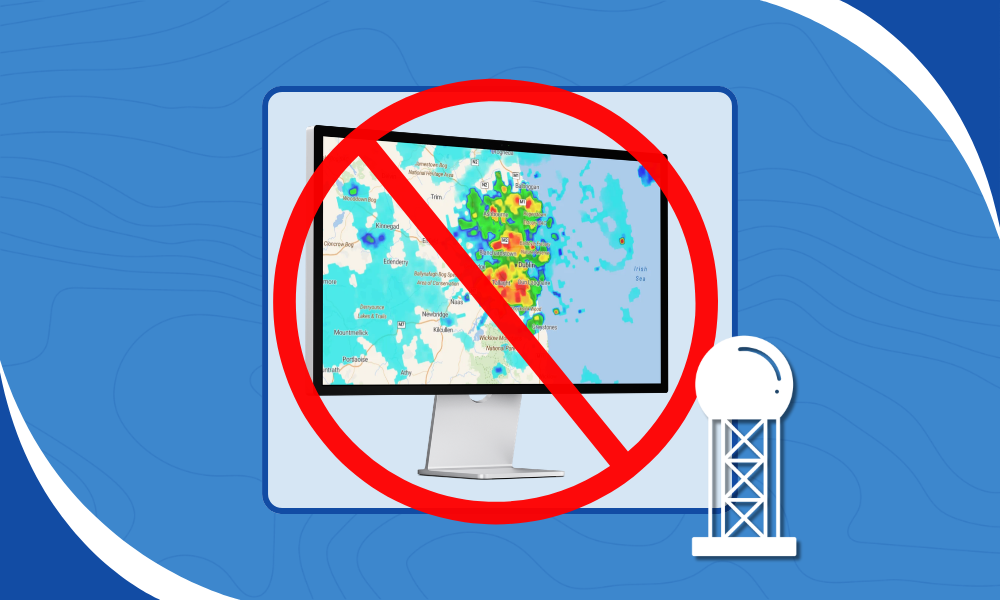
We are processing the EUMETNET OPERA composite today, and European radar data is now available upon request. That means pan-European radar reflectivity is ready to go alongside the North American products we already offer. As we’ve been testing the composite, we’ve also taken a closer look at data quality and artifacts that can show up in a product built from many different radar networks.
One Continent, Many Radar Networks
The European operational radar network spans more than 30 countries and over 160 radars. The network is heterogeneous across hardware, signal processing, transmit and receive frequencies, and scanning strategy, and the span between the oldest and newest radars exceeds 40 years. That makes working with European radar data a little different from working with a standardized national radar network.
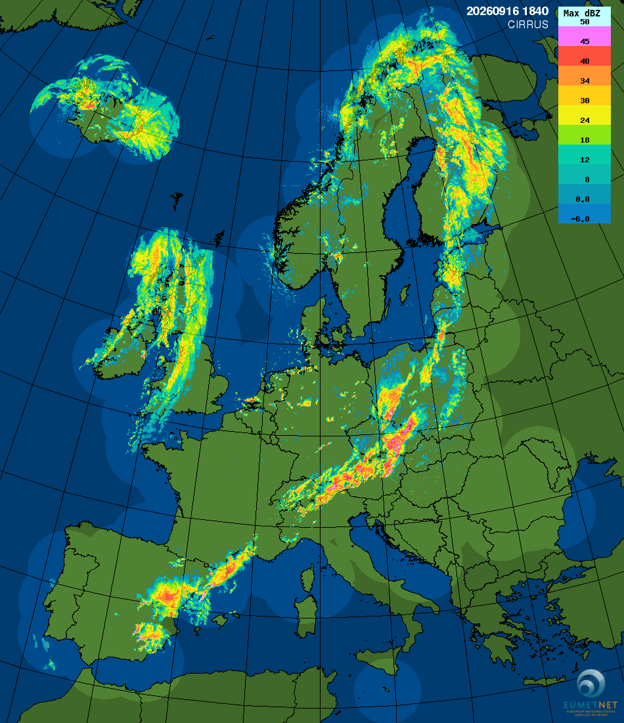
Europe’s network comprises dozens of national programs. EUMETNET’s OPERA program has worked since 1999 to harmonize formats, best practices, and central processing across those networks, which is both a genuine achievement and an ongoing effort. Because these radars are heterogeneous, artifacts are sometimes inevitable.
What European Radar Data Artifacts Look Like
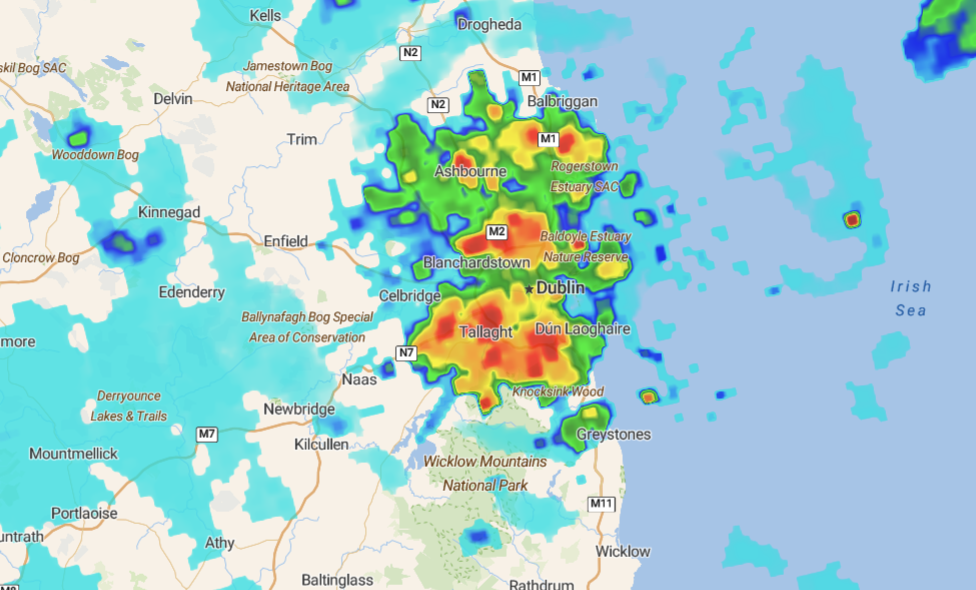
Here are two examples from a single recent composite.
Over Dublin, a compact area of high reflectivity sits near the radar site with no corresponding structure in the surrounding field. Returns clustered tightly around a radar and decaying outward are a familiar signature of local obstructions like buildings or wind-farm turbines rather than real precipitation.
Over northern Scandinavia, thin straight lines extend outward along fixed azimuths. These spokes likely come from external microwave sources sharing the C-band or from the radar pointing near the sun. OPERA has documented interference from other microwave sources as a recognized network-wide problem.
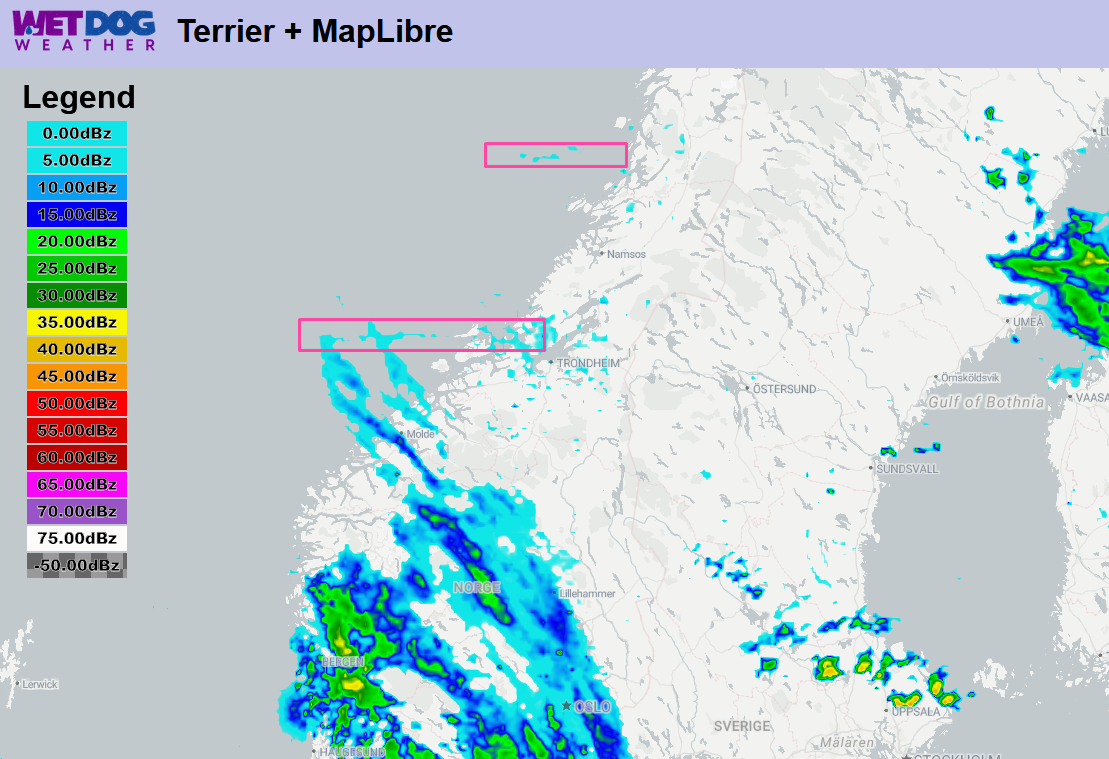
These examples illustrate some of the challenges that can appear in European radar data, particularly when observations from multiple radar systems are combined into a single continental composite.
How MRMS Handles the Same Problems
Multi-Radar Multi-Sensor (MRMS) runs a dual-polarization quality control algorithm that removes non-meteorological echoes, including ground clutter, anomalous propagation, wind farms, chaff, interference spikes, and biological scatterers like birds, bats, and insects. Its primary filter is a correlation coefficient that throws out returns below 0.95. Later steps in the algorithm reintroduce or further remove reflectivity based on three-dimensional structure and rules covering hail, non-uniform beam filling, and the melting layer. Refinements have since added sun spike mitigation, wind farm clearance, and handling of residual clutter from sidelobe effects (weak off-axis radiation that strikes ground the main beam clears, returning echoes the radar attributes to the wrong direction).
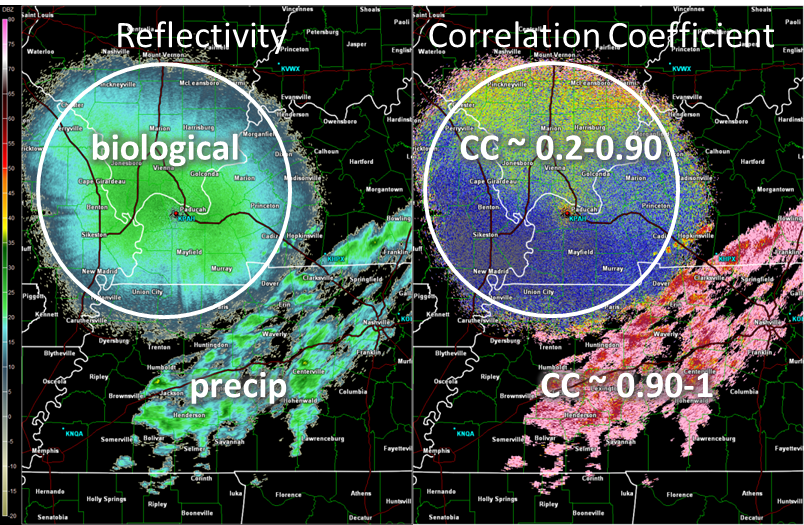
That approach works because MRMS is built on a network where every radar reports the same dual-polarization moments through NOAA’s processing chain. A single correlation coefficient threshold means the same thing everywhere in the domain.
Europe cannot apply such an approach uniformly. A network assembled over four decades from separate national programs does not offer one consistent set of polarimetric moments to filter on. OPERA’s CIRRUS product sheet notes that national data producers define the pre-processing, so filters like anomaly removal and beam blockage correction are not applied uniformly across the network. This makes quality control an important consideration when working with European radar data.
The artifacts are not a defect anyone overlooked. They are what a continental composite looks like when the underlying instruments were never built to match.
Working With European Radar Data
The OPERA composite is a strong product, and you can identify the artifacts once you know their signatures. Clutter near a radar site, spokes along fixed azimuths, and disagreement in overlap regions are all things a trained eye or a targeted filter can flag.
Boxer ingests and organizes the composite alongside the model and observation data already in your pipeline, and Terrier displays it. If European radar data would be useful to your operation, reach out and we’ll talk about in-house solutions to ensure the data gets another round of quality-control treatments.